
 Cavagnolo
  Pigini
  Saltarelle
  Musictech
 Beltuna
  Ballone Burini
  Roland
  Castagnari
  Maugein
  Scandalli
  Hohner
  Borsini
  Audio-Technica
  Mengascini
 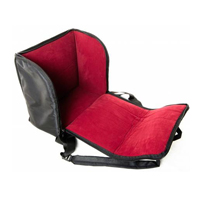 Accordion Gig-Bags
 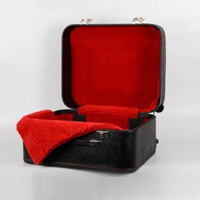 Accordion Hard Cases
 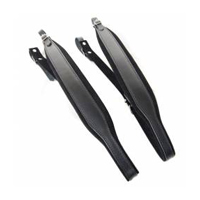 Accordion Straps
 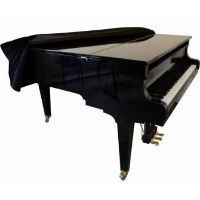 Piano Covers
  Keyboard Covers
  Sheet Music Stands, Metronomes...
  Harmonicas
  Repair parts
  Sound Equipment - UHF Wireless Systems - Amplifiers
  Sheet Music & Methods
  Stepped Keyboards
  Flat Keyboards
  Button Keyboards
 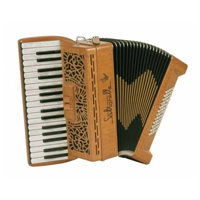 Piano Keyboards
 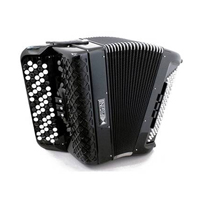 Converter Button
 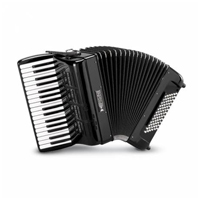 Converter Piano
 Left hand for accompaniment
The left hand of an accordion is usually used to accompany the melody played on the right hand.
The buttons on the left hand are divided into two categories:
- Free bass keys, which produce one unique note or pitch.
- Chord keys, which produce 3 notes (or 3 different pitches) to form major, minor, seventh and diminished chords.
Unlike the right hand, where each key is linked to a pallet (or 2 in the case of concert accordions), pallets on the left hand are not tied to a particular key.
A mechanical system allows a number of pallets to be operated when a key is pressed.
For example, the key corresponding to C major will operate three pallets, that of C, E and G. The key corresponding to G major will operate G, B, and D pallets.
This system provides rich accompaniment capabilities with very easy access for the musician, since one key can play a full chord.
In addition, accordion left hands have multiple voices, allowing each note to be played over multiple octaves. For comparison, a piano requires the use of both hands to play a multi-octave chord.
On the accordion this is done by simply pressing a key, and the accordionist does not have to think about the notes that make up the chord.
This complex left-hand mechanism allows the musician to easily play accompaniment patterns alongside the melody played on the right hand.